Scroll through wellness TikTok this summer and you'll keep hitting the same claim: there's a cheap, natural supplement that works "just like Ozempic." No injections, no prescription, no six-figure clinic — just a bottle of bright-yellow capsules called berberine. The hashtag has racked up hundreds of millions of views, searches have jumped roughly 50% year over year, and supplement brands have been happy to lean into the nickname "nature's Ozempic."
It's a great story. It's also, in the important ways, wrong. Berberine is a genuinely interesting molecule with real, peer-reviewed effects on blood sugar and cholesterol — but the mechanism that makes it work has almost nothing to do with how Ozempic works, and the results people are hoping for aren't the results the studies show. So let's do the honest version: what berberine actually is, why it got compared to a blockbuster weight-loss drug, what the human trials found, and where the hype quietly outruns the evidence.
What berberine actually is
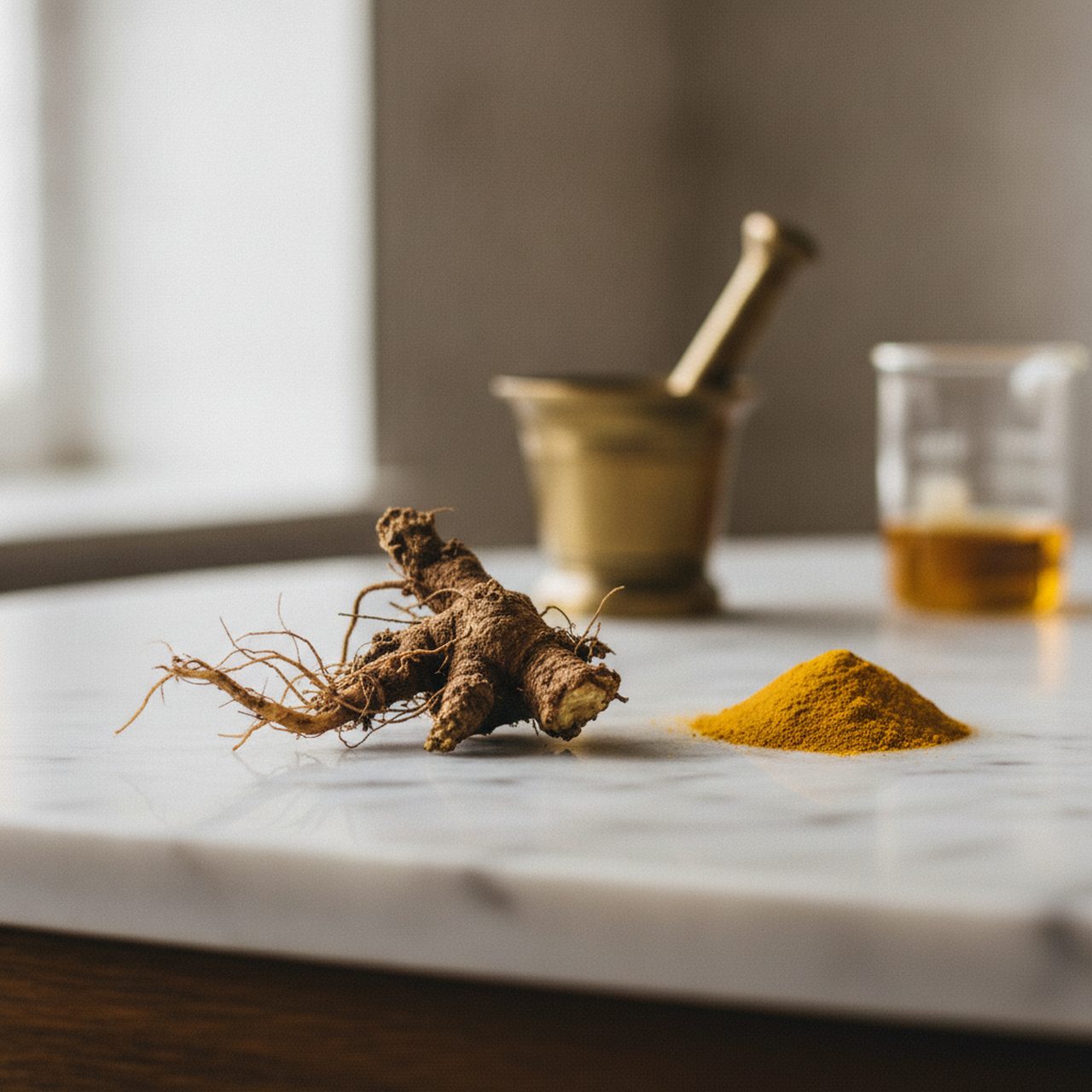
Berberine is a plant alkaloid — a naturally occurring compound with the chemical formula C20H18NO4+ — extracted from a handful of plants including goldenseal, barberry, Oregon grape and the Chinese herb Coptis chinensis. It's the pigment that gives those roots their vivid yellow color, and it has been used in traditional Chinese and Ayurvedic medicine for centuries, mostly for digestive complaints and infections.
What put it on the modern radar wasn't tradition, though — it was metabolism. Over the last two decades, lab and clinical work found that berberine can lower blood glucose, improve insulin sensitivity, and nudge cholesterol and triglycerides in a healthier direction.[1] That's a serious set of effects for a plant compound, and it's the real reason berberine earned a place in the longevity conversation long before anyone tied it to Ozempic.
Why they call it "nature's Ozempic"
The nickname comes from a surface-level resemblance: both berberine and semaglutide (the drug in Ozempic and Wegovy) can improve blood sugar, and both get talked about in the same weight-and-metabolism breath. But under the hood they are almost opposites.
Semaglutide is a GLP-1 receptor agonist. It mimics a gut hormone that tells your brain you're full, dramatically dialing down appetite — which is why people on it can lose 15% or more of their body weight. Berberine does nothing of the sort. It doesn't act on the GLP-1 system, and it doesn't produce that powerful "I forgot to eat" effect. Whatever modest weight change shows up in berberine trials comes mostly from improved insulin sensitivity and metabolism, not from appetite suppression. Calling it "nature's Ozempic" is a bit like calling a bicycle "nature's Tesla" — both get you down the road, but pretending they're the same machine sets you up for disappointment. If you want the honest comparison to the real thing, we've covered what GLP-1 drugs like Ozempic actually do to aging separately, along with the newer triple agonist retatrutide.
The AMPK switch — the real mechanism
If berberine has a true pharmacological twin, it isn't Ozempic — it's metformin, the decades-old first-line diabetes drug. Both work largely by switching on an enzyme called AMPK (AMP-activated protein kinase), which acts as the cell's master fuel gauge. When AMPK is activated, the cell behaves as if energy is scarce: it pulls glucose out of the blood, burns fat for fuel, and dials back the wasteful manufacturing of new fat and cholesterol.
In laboratory and animal studies, berberine reliably triggers this AMPK pathway, which in turn shifts how the liver handles sugar and fat.[2] That's not a vague "boosts metabolism" claim — it's a specific, well-mapped molecular switch, and it's the same switch that makes metformin one of the most-studied drugs in aging research. That overlap is exactly why longevity enthusiasts got interested in berberine in the first place.
What the human trials actually show
Here's where berberine earns genuine respect — and where we have to keep the numbers honest.
The landmark study came in 2008. Researchers randomly assigned 36 adults with newly diagnosed type 2 diabetes to either berberine or metformin, and over three months the two performed remarkably similarly: berberine dropped HbA1c (a three-month average of blood sugar) from about 9.5% to 7.5%, and cut fasting and post-meal glucose sharply — results statistically on par with metformin.[3] In a second arm of the same study, adding berberine for people whose diabetes was poorly controlled lowered fasting insulin by 28% and a key measure of insulin resistance by 45%, while also improving cholesterol.[3]
That single small trial isn't the whole case, though. A 2021 systematic review pooled 46 randomized trials and found that berberine produced meaningful reductions in HbA1c, fasting glucose, insulin resistance and LDL cholesterol, with the strongest signal when it was used alongside standard diabetes therapy rather than instead of it.[4] For a supplement, that's an unusually solid stack of human data — much better than most of the pills lining the longevity shelf, and far more than the majority of longevity supplements can claim.
But read the fine print the same reviewers did. Many of the trials were small, short, and conducted in China, where study quality and publication standards vary; the pooled effect, while real, is roughly in the range of a modest dose of a standard glucose-lowering drug — helpful, not miraculous. Berberine is a metabolic nudge with good evidence, not a diabetes cure and certainly not a weight-loss drug.
The longevity leap — and where it gets speculative
So why is an anti-aging site interested at all? Because AMPK sits at the center of some of the most compelling ideas in longevity biology. Activating AMPK mimics parts of what happens during calorie restriction and fasting — states repeatedly linked to healthier aging. And AMPK feeds into another famous longevity pathway: it can raise levels of NAD+, the coenzyme that powers the "anti-aging" sirtuin enzymes.[5] In other words, berberine plausibly tugs on the same molecular strings as fasting, metformin, and the whole NAD+ and sirtuin story.
That's a genuinely exciting connection — and also exactly the point where you should tighten your skepticism. "Activates a pathway associated with longevity" is a very different claim from "makes people live longer." There is no long-term human trial showing berberine extends lifespan or healthspan; the longevity case is built on mechanism and metabolic markers, not on outcomes. The same caution applies to every AMPK-based longevity pitch, metformin included. Berberine's metabolic benefits are well documented; its anti-aging benefits are, for now, a well-reasoned hope.
The catch the clips leave out
Two practical problems rarely make it into the viral versions. The first is absorption. Berberine is notoriously hard for the body to take up — its oral bioavailability is very low, because the gut wall and liver clear most of a dose before it ever reaches your bloodstream.[6] That's part of why doses are typically split to 500 mg two or three times a day, and why the gap between "works in a dish" and "works in a person" is real.
The second is tolerability. In the trials, berberine's most common downside was digestive: cramping, diarrhea, constipation and gas, reported in roughly a third of users.[3] It can also interact with common medications — it affects the same liver enzymes that process many drugs — which matters a lot if you're already taking something for blood pressure, cholesterol or blood sugar. And because berberine is sold as a supplement, not a regulated drug, the actual dose and purity in any given bottle can vary more than the label suggests.
The honest bottom line
Berberine is one of the more legitimate supplements in the longevity aisle — and one of the most oversold. The real version: it activates AMPK, the same fuel-sensing switch as metformin; it has a solid body of human trials showing it lowers blood sugar and improves cholesterol, especially as an add-on; and it plausibly touches longevity pathways that researchers care about.
The hype version — "nature's Ozempic" — gets the mechanism, the magnitude, and the point all wrong. Berberine won't suppress your appetite, won't melt off 15% of your body weight, and hasn't been shown to make anyone live longer. If you have metabolic issues, it's a supplement worth discussing with a doctor, particularly given the drug interactions. If you're chasing the Ozempic effect from a capsule, you're going to be let down. As usual in this field, the truth is more modest and more interesting than the trend: a centuries-old yellow root with a real, if quiet, seat at the metabolism table — no injection, and no miracle, required.
Common questions
Is berberine really 'nature's Ozempic'?
Not in the way the nickname suggests. Ozempic (semaglutide) is a GLP-1 receptor drug that powerfully suppresses appetite. Berberine works through a completely different route — it activates the cellular energy sensor AMPK, much like the diabetes drug metformin. It can modestly lower blood sugar and improve cholesterol, but it does not produce the dramatic appetite loss or weight loss of a GLP-1 drug. The 'nature's Ozempic' label is marketing, not pharmacology.
Does berberine work as well as metformin for blood sugar?
In one small 2008 randomized trial of newly diagnosed type 2 diabetes, berberine lowered HbA1c and fasting glucose about as much as metformin over three months. A 2021 meta-analysis of 46 trials found berberine meaningfully reduced HbA1c, fasting glucose and cholesterol, especially as an add-on to standard therapy. But most trials were small and conducted in China, and berberine is a supplement, not an approved, quality-controlled medicine. It is not a proven substitute for metformin.
What is the catch with berberine supplements?
Two big ones. First, berberine is poorly absorbed — its oral bioavailability is very low because the gut and liver clear most of it before it reaches the bloodstream. Second, it commonly causes digestive side effects such as cramping, diarrhea and constipation, reported in roughly a third of users in trials, and it can interact with other medications. It is also not regulated like a drug, so dose and purity vary between brands.