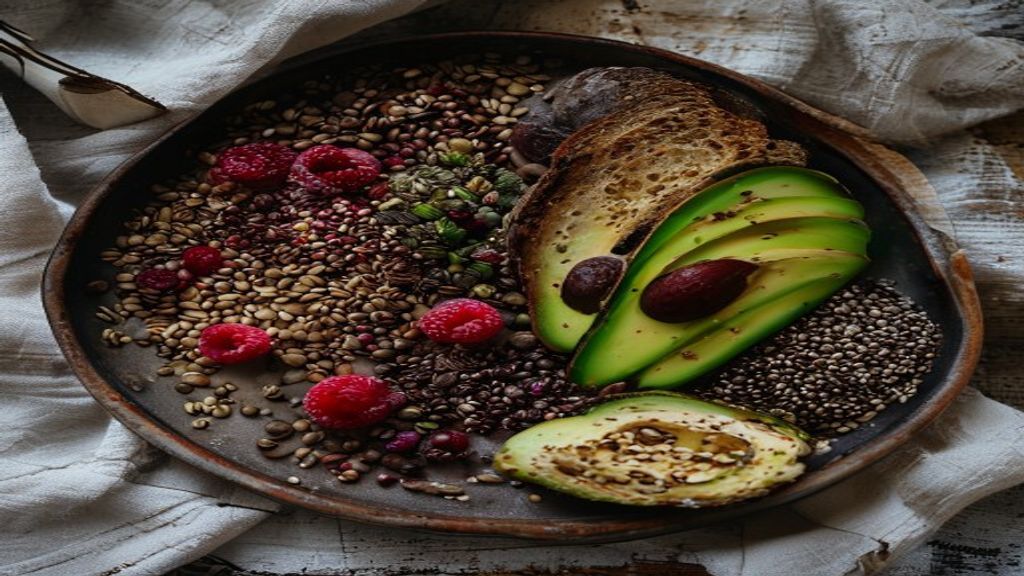
Scroll through wellness TikTok this summer and you'll meet a peculiar new flex: people stirring chia seeds into water, topping oatmeal with raspberries and psyllium, and cheerfully announcing they've hit "fifty grams before noon." The hashtag is fibermaxxing — the deliberate maximizing of daily fiber — and it has become one of 2026's defining longevity trends, racking up hundreds of millions of views and turning a nutrient your grandmother nagged you about into an aspirational lifestyle.
It's a striking turn. For years the viral longevity conversation has been dominated by things that are expensive, exotic or barely tested: peptide stacks, NAD drips, rapamycin, hundred-dollar supplement regimens. Fibermaxxing is the opposite. It costs almost nothing, comes from the produce aisle, and — unusually for a trend this loud — rests on some of the strongest nutrition evidence we have. That doesn't mean the internet is getting all of it right. So let's separate the durable science from the hashtag theatrics.
What 'fibermaxxing' actually means
At its simplest, fibermaxxing is the practice of intentionally packing as much dietary fiber into your day as possible, usually from whole foods: legumes, oats, chia and flax seeds, berries, leafy greens, whole grains, nuts and vegetables. Creators frame it as a fix for a long list of modern complaints — sluggish digestion, energy crashes, relentless hunger, blood-sugar spikes — and increasingly as an anti-aging move, on the theory that a well-fed gut is a longer-lived body.
The number that gets thrown around is the giveaway that marketing has entered the room. Plenty of videos treat 50, 60, even 70 grams a day as the goal, framing "more" as automatically "better." Hold that thought, because it's where the trend drifts away from the evidence. But the underlying instinct — that most of us should be eating substantially more fiber than we do — is not just correct, it may be one of the most underrated moves in the entire longevity playbook.
The science the trend gets right
The strongest evidence for fiber and healthy aging comes from a landmark 2019 series of systematic reviews and meta-analyses published in The Lancet, commissioned by the World Health Organization.[1] The researchers pooled nearly 135 million person-years of data from 185 prospective studies and 58 clinical trials — an enormous body of evidence by nutrition standards.
The findings were hard to ignore. Compared with people who ate the least fiber, those who ate the most had a 15 to 30 percent lower risk of dying from any cause and of dying from cardiovascular disease, along with lower rates of coronary heart disease, stroke, type 2 diabetes and colorectal cancer. On the clinical-trial side, higher fiber intake lowered body weight, blood pressure and cholesterol. Crucially, the dose-response pattern was so consistent that the authors judged the relationship could be causal — a rare and cautious word in nutrition science.
Here's the part fibermaxxing videos tend to skip: the same analysis found that most of the benefit landed when daily fiber reached about 25 to 29 grams. Intakes above that appeared to add a little more protection, but the curve flattened. In other words, the evidence supports getting to roughly 30 grams far more strongly than it supports the race to 50 or 70. The biggest, most reliable payoff comes from closing the gap between "barely any" and "enough," not from stacking fiber toward heroic numbers.
Why fiber does so much: the gut connection
Fiber earns its longevity reputation partly because of what it isn't — your body can't digest it — and entirely because of what your gut bacteria do with it. When fiber reaches the colon, resident microbes ferment it into short-chain fatty acids such as butyrate, acetate and propionate. Far from being waste, these molecules are among the most studied bacterial products in human biology.
A 2016 review in Cell laid out how short-chain fatty acids act as genuine signaling molecules: they fuel the cells lining your colon, activate specific receptors, influence immune and metabolic pathways, and even affect gene expression by inhibiting certain enzymes.[2] A companion review in Cell Host & Microbe in 2018 traced how the type and amount of fiber you eat directly shapes which microbes flourish and how much of these beneficial compounds they produce.[3] Feed your microbiome a varied, fiber-rich diet and you tend to get a more diverse community and a steadier supply of butyrate; starve it of fiber and the ecosystem narrows and the gut lining suffers. This is the same story we told in our look at the gut microbiome and aging — fiber is the single most dependable lever you have over it.
That mechanism also explains a couple of the trend's other claims. Soluble fiber slows how quickly the stomach empties and blunts the rise in blood sugar after a meal, which is why creators talk about steadier energy and fewer cravings — a gentler, food-based echo of the appetite effects people chase with GLP-1 medications. Viscous fibers also bind bile acids, nudging cholesterol down. None of this is magic; it's just physiology that happens to line up with what people report.
The gap almost everyone is ignoring
If fiber is this good and this cheap, why isn't everyone already getting enough? Because almost no one is. According to research on U.S. consumption, average fiber intake sits around 15 grams a day — roughly half the recommendation — and only about 5 percent of the population actually meets the target.[4] Awkwardly, surveys show most people believe they already eat enough, which is exactly how a deficiency stays invisible.
For context, mainstream guidelines suggest about 25 grams a day for women and 38 grams for men, or roughly 14 grams for every 1,000 calories eaten. Set against a national average of 15 grams, the real public-health problem was never that people fiber-max too hard. It's that the overwhelming majority never get close to the amount the Lancet data associate with living longer. Seen that way, fibermaxxing is a wildly over-corrected answer to a very real deficit — the internet's habit of turning a sensible target into a competitive sport.
Can you overdo it? The fibermaxxing catch
Yes, and this is where the trend's weakest advice can backfire. Fiber is famously well tolerated, but the operative word is gradually. Jumping from 15 grams to 50 grams overnight — which is precisely what a "fibermaxxing challenge" encourages — is a reliable recipe for bloating, gas, cramping and, ironically, constipation. Your gut bacteria need weeks to adjust to a bigger workload, and dumping a mountain of fermentable material on them all at once produces exactly the discomfort people then blame on fiber itself.
There are firmer limits too. Very high fiber intakes, especially without enough fluid, can bind certain minerals and, in rare cases, contribute to an intestinal blockage. People with conditions like irritable bowel syndrome or inflammatory bowel disease can find that a sudden fiber surge — particularly from fermentable types — makes symptoms worse, not better. And piling fiber powders into an otherwise poor diet is not the same intervention as eating the varied whole foods the research actually measured. The studies that show fiber's benefits were watching people eat beans and oats and vegetables, not spooning isolated psyllium into soda.
How to fibermaxx without regretting it
The sane version of this trend is genuinely worth doing. Aim for the evidence-backed zone — somewhere around 25 to 35 grams a day — rather than an arbitrary 50. Get there over three or four weeks, not in a weekend, adding a serving of beans, lentils, berries or whole grains at a time and noticing how you feel. Drink more water as you go; fiber works by holding onto fluid, and it can't do its job dry. Favor variety over any single hero ingredient, because different fibers feed different microbes and the diversity is part of the point.[3] And treat supplements as a backstop for a genuine shortfall, not a substitute for the plants themselves.
What makes fibermaxxing refreshing is that, unlike most of what trends in longevity, the core of it is true, affordable and within reach of almost anyone. The hashtag oversells the numbers and undersells the ramp-up, as hashtags do. But the durable idea underneath — that steadily working more real, fiber-rich food into your day is one of the best-evidenced things you can do for a longer, healthier life — is one of the rare wellness trends that deserves to outlast the summer. For more on the daily habits with this kind of evidence behind them, see our guide to longevity habits that actually hold up.
Common questions
What is fibermaxxing?
Fibermaxxing is a viral social-media trend in which people deliberately push their daily fiber intake far above the norm — often aiming for 50 grams or more a day — by loading up on beans, chia seeds, oats, berries, vegetables and whole grains. The goal, as promoted online, is better digestion, steadier appetite and blood sugar, and healthier aging. The underlying idea that most people should eat more fiber is well supported; the specific 50-to-70-gram targets some creators chase are not backed by strong evidence and can cause problems if reached too fast.
How much fiber should you eat per day?
Mainstream guidelines recommend roughly 25 grams a day for women and 38 grams for men, or about 14 grams per 1,000 calories. In a large series of meta-analyses, the greatest reduction in early death and chronic disease appeared at intakes of about 25 to 29 grams a day, with some added benefit above that. Most adults fall far short: average intake is around 15 grams a day and only about 1 in 20 people meet the recommendation.
Can you eat too much fiber?
Yes. Ramping up fiber too quickly — especially to the 50-plus grams some fibermaxxing videos promote — commonly causes bloating, gas, cramping and constipation, and very high intakes can interfere with the absorption of some minerals or, rarely, cause a blockage if fluid intake is low. The safe approach is to increase fiber gradually over several weeks, drink plenty of water, and get it from a variety of whole foods rather than a single supplement.